
How Do Dogs Communicate with Each Other?
When you see two dogs sniffing, circling, or wagging their tails at one another, you’re watching dog communication in action! Even without words, our furry friends have a sophisticated dog language that they can use to understand one another.
When dogs “talk” to each other, they’re not sharing complex ideas. Instead, dogs communicate by signaling emotions and intentions. According to the Collaborative for Shelter Dogs, part of the Cummings School of Veterinary Medicine at Tufts University, dogs use a blend of sights, sounds, and smells to express fear, excitement, anxiety, aggression, and relaxation.
How Dog Communication Evolved: Dogs vs. Wolves
Many forms of canine communication seen in dogs today originated with their wolf ancestors. Wolves wag their tails during friendly greetings, howl to locate their pack, and mark territory with scent—all instincts domestic dogs still share.
For wolves, clear communication helps maintain social order and keep the pack functioning smoothly. Modern dogs have adapted these same instincts for today’s world, developing new ways to communicate not just with other canines, but also with humans and other animals!
4 Ways Dogs Communicate with Each Other
Wondering how to speak dog? Dogs have four primary ways they communicate, using nearly all of their senses when interacting with one another.
#1: Dog Body Language
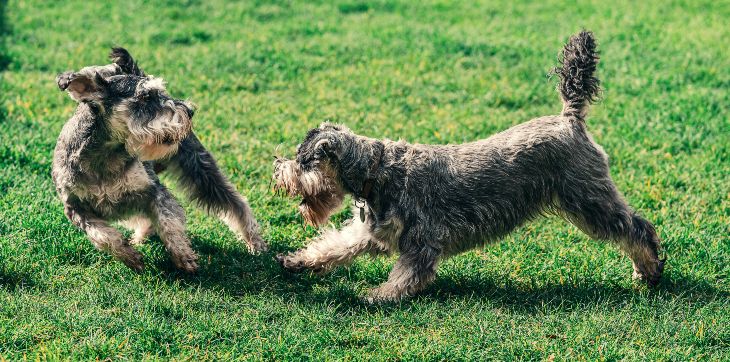
Body language is one of the clearest ways dogs communicate with each other. Everything from tail angle to ear position tells a story. Using a combination of body signals, dogs can convey friendliness, aggression, submission, and other emotions.
Positive, early socialization helps dogs learn how to read these cues in other dogs and respond appropriately. Giving your dog opportunities to interact with other dogs is one of the best ways to support healthy dog communication skills. Remember to reinforce your dog’s good communication behavior by rewarding them with high-value treats!

#2: Sounds and Vocalizations
Many dog parents wonder, “Do dogs understand each other when they bark?” While barking doesn’t function like human speech, dogs do recognize tone, intensity, and rhythm, which helps explain how dogs communicate through sound.
Dogs use barks, growls, whines, and other vocalizations to express different messages. For example, a short, sharp bark means they’re alert and excited, while a high-pitched whine means they’re anxious or want attention.
An action that directly ties dogs to their wolf roots is howling. Wolves howl to locate pack members over long distances. Sometimes, when a dog hears a siren, they’re reminded of those long-distance howls and they instinctually howl back in response.
#3: Scent Marking
A dog's sense of smell is extremely powerful—up to 100,000 times stronger than a human’s. Dogs rely heavily on scent to communicate with each other, especially through urine marking. Pheromones in dog urine convey details such as who passed by, when they were there, their gender, and even their emotional state.
When your dog pauses to sniff or mark during a walk, they’re participating in a complex form of scent-based dog communication. Scent-marking is also rooted in instinct, as wolves use marking to establish territory boundaries and signal pack presence.
#4: Physical Touch
Physical contact, like licking and pawing, also plays an important role in how dogs communicate with each other, especially during greeting rituals or playtime.
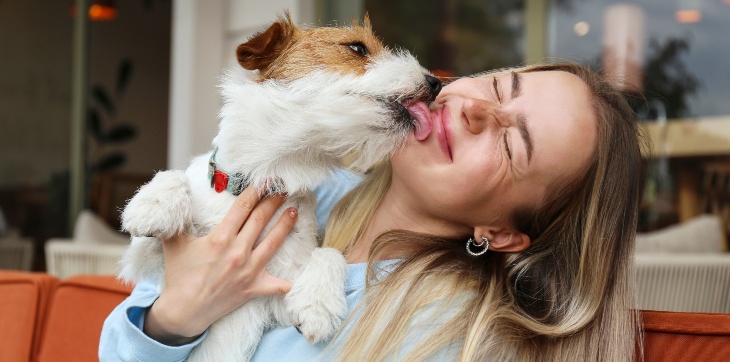
We typically think of dogs licking us as giving “kisses,” and that’s not too far from the truth. Licking often communicates affection or submission. Wolf pups lick adults returning from a hunt to request food, while mother dogs lick their puppies for bonding and grooming. Today’s dogs continue to use these behaviors with their families.
Pawing is another common dog communication signal. A dog may place a paw on a person or another dog to gain attention or initiate interaction. During play, dogs may also use their mouths and teeth in a controlled way, such as gently grabbing each other’s necks. This behavior, which looks intense but is typically harmless, has roots in how wolves establish hierarchy and engage socially.
How Do Dogs Communicate with Humans?
While canine language wasn’t originally intended for humans, the domestication process led dogs to find ways to communicate their emotions through body signals that humans can easily recognize.
Over time, dogs evolved specialized facial muscles that allow them to raise their eyebrows and make expressions that appeal to humans. These subtle movements help strengthen their bond with us and convey emotion in ways wolves cannot.
🐕 Related: 6 Surprising Signs Your Dogs Loves You
Learning to Speak Dog
The next time you see your dog interacting with another, look closely at how they use dog body language, sound, scent, and touch. You may start to notice a range of canine communication signals you hadn’t seen before and understand the many ways dogs communicate with each other even without words.
Are you interested in learning more about dog behaviors that they inherited from wolves? Explore one of these articles next: